
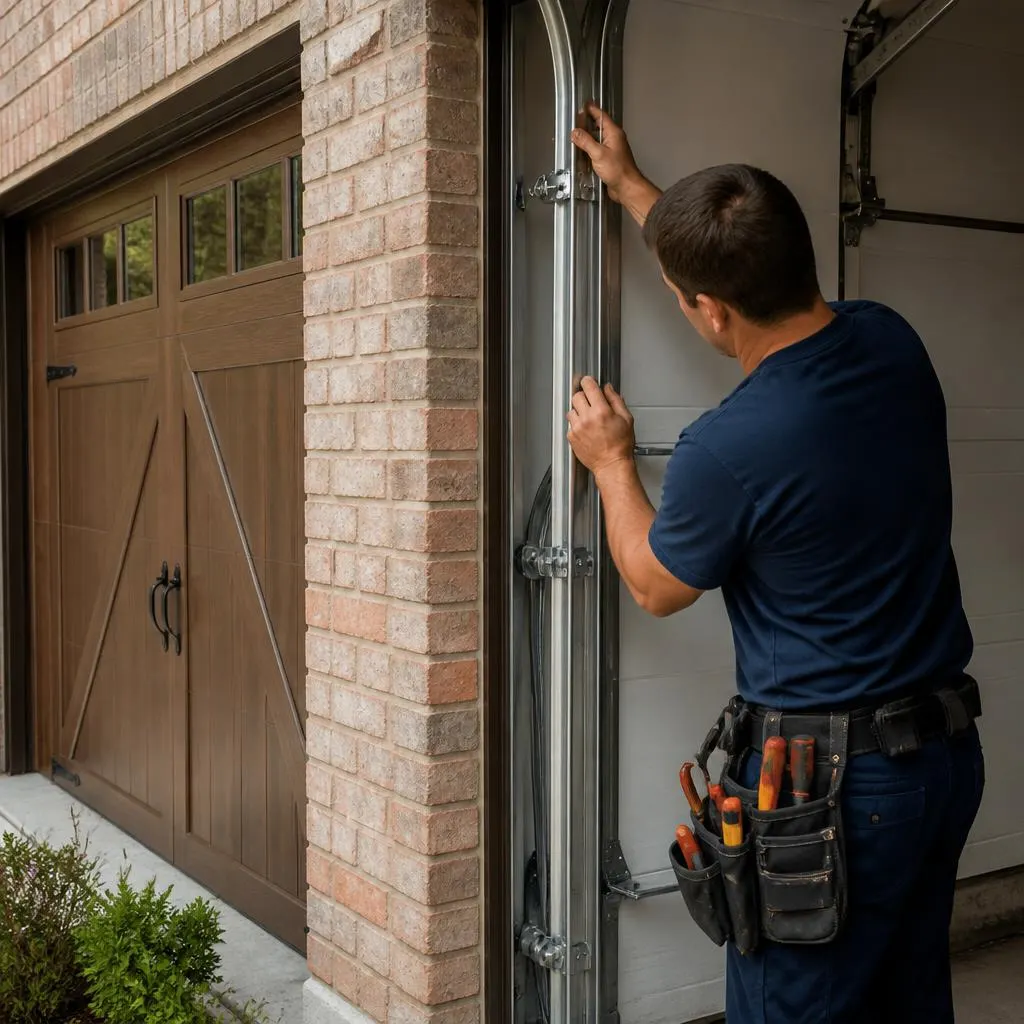
It usually happens mid-workout. You're on the garage floor doing push-ups or lifting in what used to be the car's spot, and you notice cold air sliding in along the bottom of the door. Or you're on a call in your new home office setup and the opener kicks on with a bang that makes you jump every time someone pulls into the driveway next door. One spouse says "it's fine, just close the gap with a towel." The other says "we need a whole new door." Here's what's actually going on.
The Door Was Never Built for a Living Space
Most garage doors, especially the original doors still hanging on a lot of the older homes around here, were designed to keep out weather well enough for a car, a lawnmower, and some bins. They weren't built to keep a room at a comfortable temperature for a treadmill session or a few hours at a workbench. When you start spending real time in that space, you notice things you never cared about before:
- Daylight or draft visible along the bottom seal or side weatherstripping
- A noticeable temperature swing near the door compared to the rest of the room
- Condensation on the inside of the door panels, especially in humid stretches
- Noise from the opener or rollers that was background noise before but is now right next to your desk or bench
None of this means the door is broken. It means the door's job changed, and it hasn't been upgraded to match.
What's Actually Different Once You Use the Space More
Insulation and the weather seal
A single-layer, non-insulated steel or wood door will transfer cold straight through in winter and get warm and humid in summer. If you've added gym equipment, electronics, or tools that don't like temperature swings, the door's R-value suddenly matters in a way it didn't when it only sheltered a car. The bottom astragal seal and side weatherstripping also take a beating from road salt and the freeze-thaw cycle every winter here, and a seal that's cracked or compressed lets in both cold air and meltwater.
The opener gets used differently
When the garage was just for parking, the door opened twice a day. Once it's a gym or workshop, people are in and out more, sometimes propping the door open for airflow, sometimes running it with the room already warm or humid inside. That's more cycles on the opener, more exposure of the motor and gears to moisture, and more chances for a minor issue, like a dry chain or a loose sensor, to turn into a real failure.
Springs and balance don't stay set-and-forget
If anyone's added insulation panels to the door itself, hung shelving on the inside, or swapped to a heavier door altogether, the weight balance changes. A door that used to lift smoothly can start to feel heavy, drift down on its own, or make the opener strain. Springs calibrated for the old setup won't be correct for the new one, and that's not a cosmetic issue, it's a safety one.
The Argument, Settled
One spouse wants to just add weatherstripping and call it done. The other wants a full insulated replacement door. Both can be right, depending on how the space is used:
- If the room is used occasionally (weekend workshop, light storage with a gym corner), sealing gaps, servicing the opener, and making sure the door is balanced is usually enough. This is a maintenance-level fix, not a replacement-level one.
- If the room is used daily for workouts, work calls, or projects that need stable temperature, an insulated garage door is worth the conversation. It won't make the space match the rest of the house, but it closes the single biggest gap in comfort and noise.
- If the opener is the main complaint (noise, slow response, random reversals), that's often a separate fix from the door itself and shouldn't get bundled into a bigger decision than it needs to be.
The honest trade-off: full insulated replacement doors run into the higher end of national price ranges for garage doors, while sealing and servicing an existing door is a fraction of that. Neither is the wrong answer, they solve different problems.
What the Weather Adds to the Decision
Nor'easters and icy, salty winters aren't kind to garage doors in general, and that's doubled when the garage is now a space you actually sit in. A gap that let in a little draft in a storage garage becomes a real comfort issue when you're trying to work out or work from that room in January. Humid summers do the opposite problem, swelling wood doors and fogging up any windows in the door panel. Older original doors tend to show both issues faster than newer insulated models.
When to Call Albertson Garage Door
If you're noticing drafts, a door that feels heavier than it used to, or an opener that's suddenly louder or less reliable since the garage turned into a living space, that's worth a look before you decide between "patch it" and "replace it." Our garage door maintenance service checks seals, balance, and opener condition and tells you honestly which category your door falls into. If the springs or opener are actually the problem, spring replacement or opener repair and installation usually solves it without needing a full new door.
If you're in Albertson, Mineola, Roslyn Heights, Williston Park, or the surrounding Nassau County area and your garage has quietly turned into a gym, office, or workshop, give Albertson Garage Door a call. We'll tell you straight whether you need a seal, a service, or a new door, and get it handled.